A cheap attempt is not a cheap finished film
Why can one creator finish a twenty-second scene while another keeps buying more attempts? The price of a generation tells you what one attempt costs, not how much footage will survive the edit. We will budget an imaginary scene about returning a letter on a rainy night: establish the street, approach the door, place an envelope, and show someone inside discovering it. Each of four shots contributes five seconds to the planned edit. Define the deliverable first, then give each shot an allowance and an exit condition. Every cost below uses hypothetical budget units, not any platform’s credits, currency or current prices. Durations are editorial targets, not model capability claims. Replace these numbers with your actual billing terms and available settings before using the worksheet for a real project.
Define acceptance before measuring waste
Give each shot one acceptance statement: the street establishes the same door; the approaching person moves toward it in consistent clothing; the only envelope transfers from hand to the ledge beside the door; the discovery reaction communicates recognition. Mark what the story must retain and what can change. The placement matters, but showing every finger movement may not. If the plot must prove that no substitution occurred, contact must remain visible. Arrange stills and temporary sound into twenty seconds and check that all four facts read clearly. Agree on these conditions before discussing polish, so each round does not acquire a new requirement. If the target is still changing, classify the work as exploration rather than treating its costs as a stable production estimate.
Assign shot allowances and protect a reserve
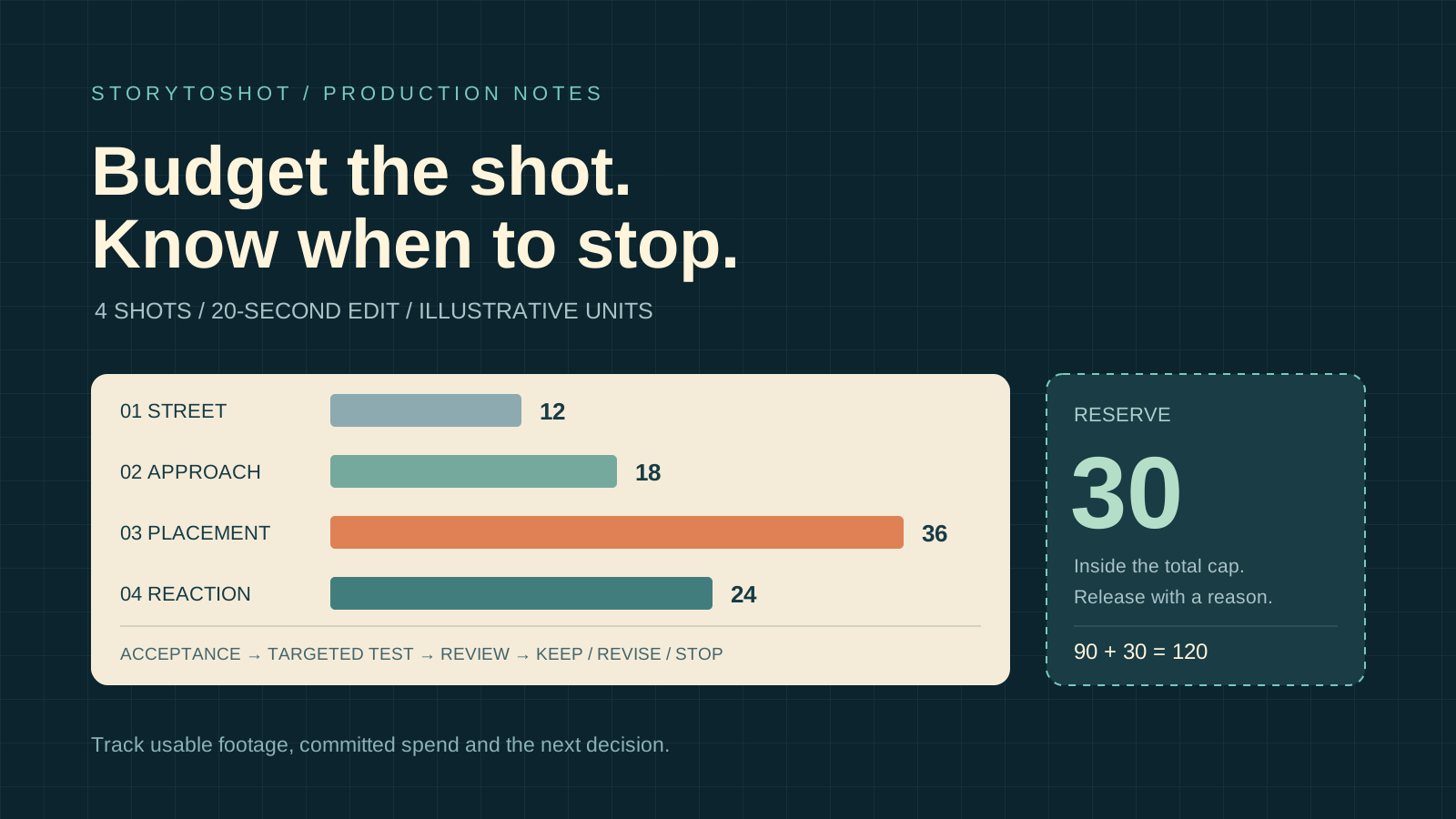
Assume a generation cap of 120 units and, for this exercise, three units per attempt at the selected settings. Allocate 90 units first: 12 for the street, 18 for the approach, 36 for placement and 24 for the reaction. That allows at most four, six, twelve and eight equal-price attempts respectively. Keep 30 units unallocated. Narrative importance and motion risk drive this split, not shot duration: placement involves contact and gets more diagnostic room. These are example allocations, not recommended proportions. Track settled spending, submitted but unsettled work, and remaining available funds separately. Reserve the cost of queued jobs before billing updates, so pending work cannot accidentally be spent twice. The reserve sits inside the 120-unit cap; it is not another allowance added after the cap has been reached.
Test the shot most likely to change the plan
Do not batch-generate attractive street shots before discovering that the crucial placement cannot communicate the event. Spend two attempts from shot three’s allowance to answer one question: can the envelope visibly remain on the ledge? Hold the references, composition and action brief stable. Use the first result to identify a failure, then change one main cause for the second, such as shortening the hand’s route. At three units each, these six units count against the placement allowance of 36; testing is not a free phase outside the budget. If the evidence is inconclusive, record that uncertainty rather than turning two observations into a reliable success-rate estimate. A pilot exposes design problems. If you need new references or a split shot, recalculate the work before resuming the other shots.
Separate generation spending from usable footage cost
For each attempt, log the shot ID, input version, generation settings, charge, queue and review time, selected interval and rejection reason. Suppose you submit 24 attempts at three units each, spending 72 units. Four selected clips each contribute five seconds, giving twenty seconds in the final edit. Generation spending per finished second is therefore 3.6 units. Do not divide by the total duration of every output; that counts rejected footage as productive work. When the same segment appears in two edits, count each distinct usable interval once when comparing source-footage efficiency, and state that convention. This metric still excludes reference images, voice work, music licensing, editing and human review. List those separately for a full project quote; 72 units is only the generation line item.
Diagnose the failure before spending again
A revision ticket should say more than “not good enough.” If the reference already shows a floating envelope, fix the image first. If the action order is unclear, revise the brief. If usable portions surround a faulty interval, check whether the edit can omit that interval without losing required information. Generate again when the story actually needs new visual evidence. An omission must preserve comprehension; it cannot hide a handover the audience needs to witness. Write a testable hypothesis for each round, such as “a shorter route reduces the risk of leaving the frame,” and retain both versions. Repeatedly buying attempts with the same defect and no meaningful input change yields little diagnostic information. Pause to compare a split shot or a result shot before changing the prompt, camera and character all at once.
Make a stop rule lead to a concrete action
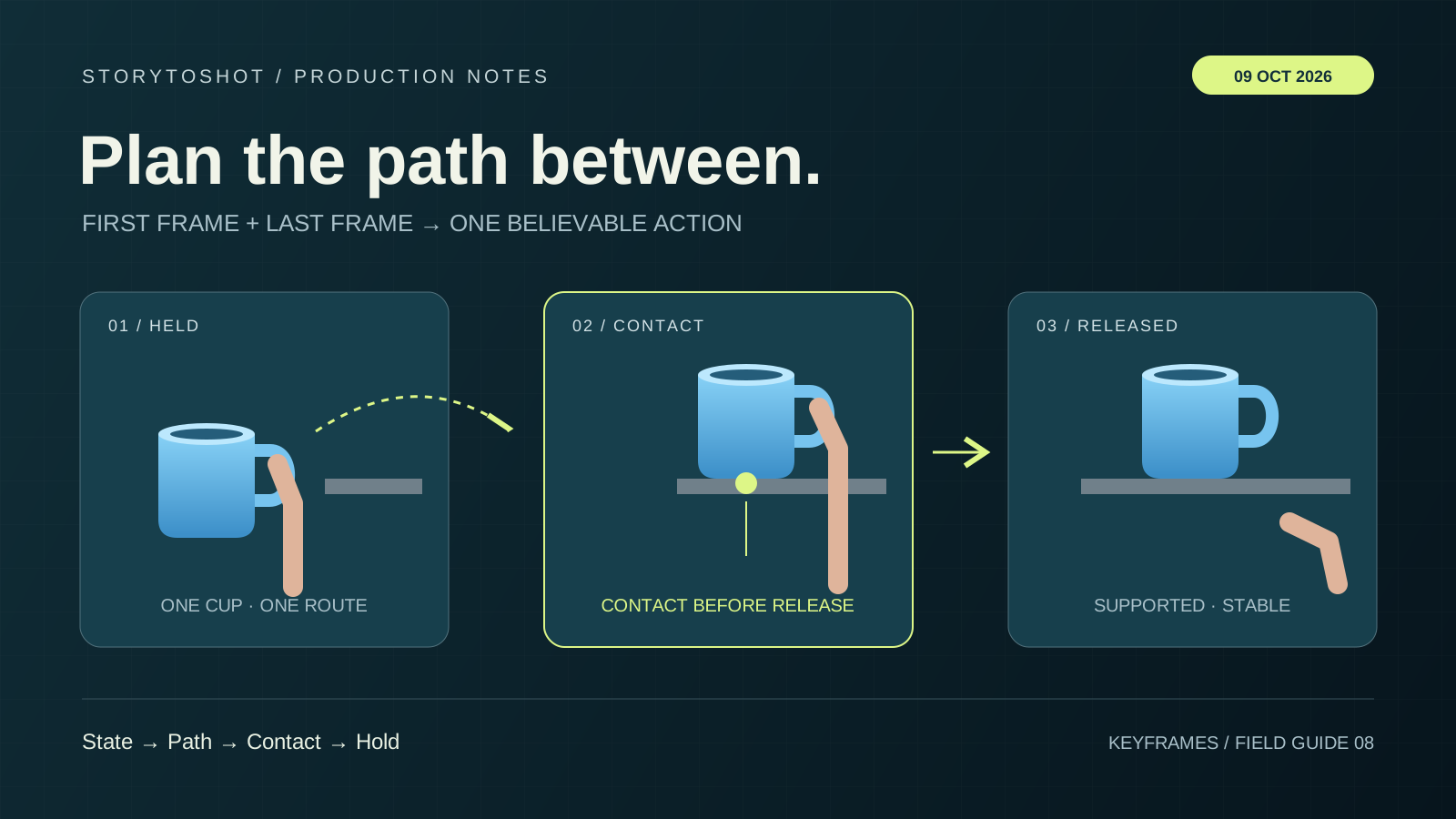
For this exercise, agree to pause a design when two targeted revisions fail to resolve the same defect. Stop automatic retries when a shot reaches its own allowance. Pausing does not mean deleting the shot. Compare three actions: simplify the movement, use two easier shots, or request reserve funds. A reserve request states the additional attempt limit, the hypothesis to test and the fallback edit if it fails. For example, simplify “place the letter and turn away” to placement alone, with departure conveyed through footsteps. The alternative is usable only if it retains the agreed story information. Two revisions is a management rule for this exercise, not a general law about models. A project that requires an uninterrupted take may need more money or a changed deadline; splitting it is not equivalent completion.
Recalculate before switching modes or batching
A lower-spec draft is worth buying only if it can answer the current question. It may settle composition, while telling you little about small text, hand detail or final motion quality in another mode. After changing resolution, duration, input method or provider, record the new attempt cost and acceptance outcomes instead of transferring an earlier acceptance fraction unchanged. Before a batch, calculate its maximum possible charge and subtract funds already committed to pending work. The worst case must still fit the cap. Check the actual provider’s billing, cancellation, failed-job charging and refund terms on the day you order, along with your account records. This guide assumes neither that failed attempts are refunded nor that lower specifications always reduce the total cost of finishing the project.
Deliver the ledger and the decisions behind it
At handoff, provide the selected files, in and out points, actual spending, remaining allowances and unresolved issues for all four shots. Distinguish the budget cap from money actually paid. If this example spends 72 units and every job has settled, 48 remain under the cap of 120. That is neither profit nor money that must be spent. Retain conclusions that can change the next plan, such as testing contact shots earlier, rather than declaring a model permanently cheaper. In StoryToShot, put acceptance statements and risks into the storyboard notes, then track actual generation charges in a separate ledger; this workflow does not assume automatic cost accounting in the product. It suits bounded short-film work and small teams. Long engagements and repeated client revisions also need staffing schedules and explicit change estimates.