1. Define the relationship change before splitting the lines
Two people alternate lines, and the camera follows whoever speaks. The facts may be clear while the scene feels static. Often the missing ingredient is a new reason to look, not another shot size. Use this fictional exercise: a sister is moving out. She puts her old key on the table and says, “The key is here.” Her brother slides over a spare: “Take the spare, too.” After a pause she accepts it, leaves the old key behind, and still departs. The change is from cutting off contact to accepting the possibility of returning; it does not establish reconciliation. Write that change above the shot list before choosing faces to show. Each cut should serve an offer, hesitation or choice, rather than a new line of dialogue. All timings below are starting points for this rehearsal, not universal rules.
2. Separate dialogue, intention and visible evidence
For each beat, record three layers. The sister’s line is “The key is here”; her intention is to end the negotiation; the visible evidence is putting down the old key and withdrawing her hand. The brother’s line is “Take the spare, too”; his intention is to leave contact possible; the evidence is sliding the spare within her reach. She needs no third line because accepting the spare supplies the decision. Intention guides direction but cannot replace an image description. “She accepts family affection with complicated feelings” does not tell an operator where her hand belongs. Allow small differences in expression while keeping the decisive actions legible. Mark this as an adaptation choice: the same words can express distance, invitation or sarcasm. One reading is not automatically the only valid interpretation of the source.
3. Establish distance, the exit and both keys in a two-shot
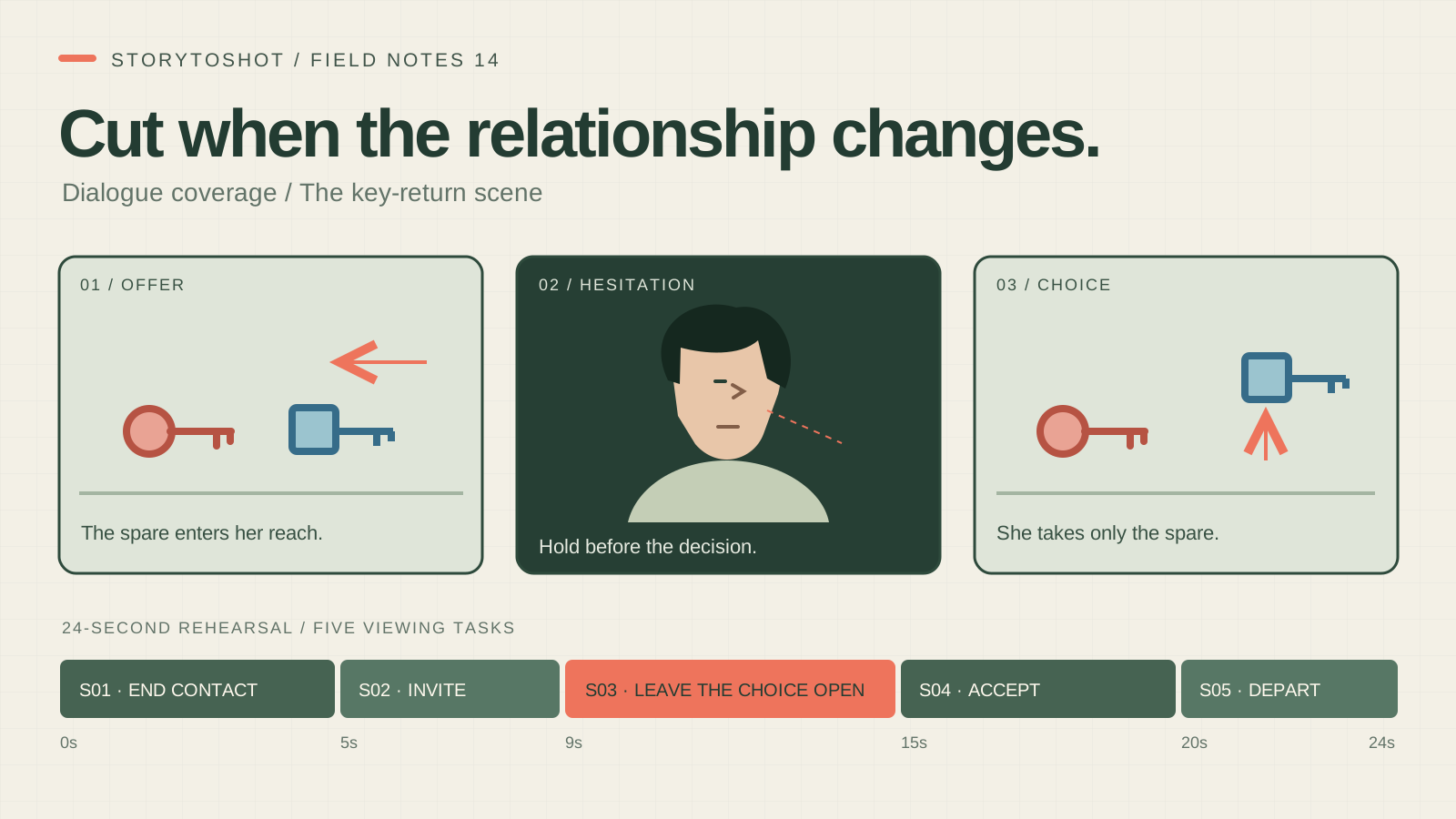
Start with a locked side-on medium two-shot: the sister is on screen left near the door, the brother on the right, with a table between them. Give the old key a red round tag and the spare a blue square tag. Shape and position must distinguish them too, so the story does not depend on color alone. The opening shot establishes which key she puts down and her proximity to the exit. The spare moves from the brother’s side; it must not appear mysteriously beside her hand. Carry this layout into closer shots, annotating eyelines, reaching directions and ownership. If the opening is too wide to read the key action, give the tabletop more space in the composition or add an essential insert. Viewers cannot recover an unstated visual fact from the production prompt.
4. Give five shots distinct jobs across 24 seconds
Try five shots. S01 runs from zero to five seconds: a medium two-shot shows the old key being placed and the first line. S02, five to nine seconds, inserts the tabletop as the brother slides over the spare, speaking off screen. S03, nine to fifteen seconds, holds on the sister as she looks at the spare and pauses without reaching. S04, fifteen to twenty seconds, shows her hand taking the spare while the old key remains. S05, twenty to twenty-four seconds, returns to the two-shot as she leaves and he does not follow. The jobs are closure, invitation, hesitation, acceptance and continued distance. Time a temporary spoken reading first; extend or rearrange shots if a line does not fit. Do not accelerate delivery just to hit 24 seconds. Five shots are not a minimum: combine actions if a two-shot already makes them clear.
5. Let a reaction hold the choice open
A reaction shot is not merely a nodding face assigned to the listener. S03 matters because the viewer does not yet know whether the sister will take the spare. Avoid an obvious smile at its start or a hand already gripping the key. Try: “Her gaze shifts from her brother to the table; her mouth relaxes without smiling; she stays by the door; her hand remains away from the tabletop.” This is adjustable performance direction, not a mandatory facial formula. Leave a real pause before cutting to the pickup so it can read as a decision. If a fresh viewer sees only blank staring, check what she is looking at and whether the preceding offer was clear before shortening the hold. Tears or sentimental music can change the relationship instead of repairing the causal link.
6. Preserve sound and picture roles in each generation task
Use a reusable S02 record: “Purpose: reveal an invitation. Picture: locked tabletop close-up; old key at front left; the brother’s hand enters from the right, slides the blue square-tagged key to the center and withdraws. Sound: brother says, ‘Take the spare, too.’ End state: two separate keys resting on the table. Must not change: the old key is not removed; no third key appears.” Approve the prop states in the starting and ending stills before testing motion. The sound field guides editing and performance; it does not imply that every video tool generates accurate dialogue. Handle voice or lip synchronization according to the actual tool. Here the second line is off screen to focus attention on the offer and reduce visible lip-sync work within that shot. Its timing must still match the key movement.
7. Test the reading with a rough cut without music
Build an animatic from storyboard stills, temporary dialogue and simple cuts, without explanatory captions or emotional music. Ask someone unfamiliar with the script to retell three things: who is leaving, who offers the second key, and whether reconciliation has already happened. For this exercise, the intended reading is that the sister leaves, the brother keeps contact possible, and she accepts the key while distance remains. If the viewer thinks she picked up the wrong key, repair prop identification and S04 first. If they report full reconciliation, examine smiles, implied embraces or an overly conclusive ending hold. An animatic tests information order, not the naturalness of final acting or lip sync; repeat the review after motion is generated. Avoid leading questions such as “Does she seem reluctant to leave?” Record the viewer’s own account.
8. Add coverage only for information that is missing
A common repair is to generate another facial close-up for every line. It adds work without clarifying the choice. Locate the failure first: unclear words need sound or timing work; an unclear invitation needs the action’s source; unclear acceptance needs the result of taking the key. If finger-key contact repeatedly fails, show the spare entering, cut to the sister’s reaction, then show her already holding it. Keep the old key visible on the table so the omitted pickup can be inferred. Removing bad frames must not leave both keys disappearing. Change one narrative problem per pass and watch the neighboring shots together to ensure the repair does not reveal her decision too soon. Add a new shot only when necessary information is genuinely absent.
9. State the limits and deliver explainable cutting decisions
This method suits short previsualization scenes with a few people and a clear physical choice. Legal statements, teaching demonstrations and information-heavy dialogue may need sustained visibility of the speaker. Deliberately detached long takes or group arguments should not be forced into five shots. Muting can help inspect action, but a dialogue scene need not remain fully understandable without its essential words. Deliver shot IDs, line ownership, viewing purpose, start and end states, estimated durations and animatic feedback. Mark adjustable pauses and the decision that must survive editing. Review each cut by asking what the audience learns or how its understanding of the relationship changes. If there is no answer, consider staying in the existing shot. Establish that the scene works in a low-cost rehearsal before investing in finished imagery and performance.